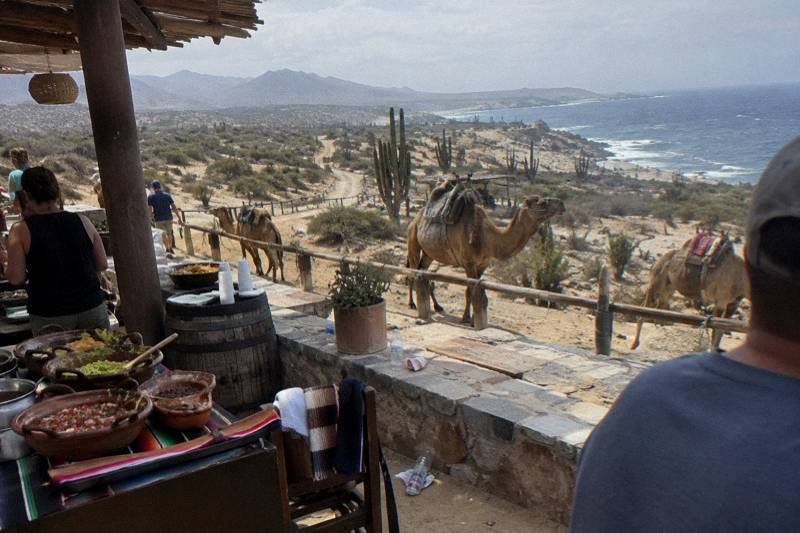
Best Time To Go To Cabo For Outdoor Tours
The month you pick for Los Cabos decides how hot the desert gets at midday, whether a storm could interrupt a boat tour, and which camel rides feel comfortable rather than survivable. Here is the season-by-season breakdown from the official Cabo San Lucas climate record.

Short answer
November to April is the most comfortable window for outdoor tours in Cabo, with desert highs in the high 70s to high 80s Fahrenheit and minimal rain. Hurricane season runs May 15 to November 30, peaking August to October, and whale season runs December 15 to April 15. Camel rides run year round.
Camel rides, ATV trails, boat trips to the Arch and canyon adventures all run year round in Los Cabos, but the month you choose changes the experience more than almost any other decision you make. A midday desert ride in August is a different product from the same ride in January. The official climate record for Cabo San Lucas, the national weather service's station 03005 normals, shows a town with two real seasons: a long dry stretch and a hot, humid late summer that carries nearly all of the year's rain.
This guide walks through the climate month by month, the hurricane and whale season windows, and what each one means for the specific rides compared across Cabo Camel Tours, from the Cactus Tours beach encounter at Migrino to the Wild Canyon canyon ride with water slides. The short version: November to April is the comfort window, December to April adds whales, and summer rides are bookable but need an early start.
What Is The Best Month To Visit Cabo For Outdoor Tours?
The best months for outdoor tours in Cabo are November through April, when desert highs sit in the high 70s to high 80s Fahrenheit and monthly rainfall stays near zero. Within that window, December through March is coolest, April and November are warmest, and February's average high of about 27C (81F) with 3.4 mm of rain is about as close to a perfect riding month as the record shows.
The climate numbers below come from the Mexican national weather service's long-term normals for station 03005 in Cabo San Lucas, covering 1991 to 2020. They are averages, not forecasts: any given day can run hotter or cooler, and September's 114 mm of average rain can fall in two afternoons or skip a given week entirely. What the averages do show is the shape of the year, and the shape is unambiguous. Rain is a late-summer phenomenon, concentrated in August and September, while the months from November through June are close to bone dry.
| Month | Avg high | Avg low | Avg rain |
|---|---|---|---|
| January | 26.6C | 12.8C | 6.2 mm |
| February | 27.0C | 12.9C | 3.4 mm |
| March | 28.5C | 13.9C | 1.4 mm |
| April | 30.1C | 15.4C | 0.0 mm |
| May | 32.1C | 16.5C | 0.1 mm |
| June | 32.6C | 18.5C | 0.4 mm |
| July | 34.4C | 22.5C | 8.1 mm |
| August | 34.7C | 23.8C | 76.4 mm |
| September | 33.7C | 23.3C | 114.0 mm |
| October | 33.4C | 21.2C | 24.4 mm |
| November | 30.4C | 17.5C | 16.9 mm |
| December | 27.4C | 14.0C | 7.3 mm |
For a camel ride specifically, the numbers translate directly. Saddle time on the shared rides listed here is short, roughly 10 to 30 minutes of actual riding per operator descriptions and guest reports, with Cactus Tours stating about 25 minutes of riding on its beach encounter. But the ranch visit, the buffet and the tequila tasting around it add hours, and those hours are spent outdoors. A February booking means pleasant sun for all of it. An August booking means the whole package leans on shade, water and an early or late departure slot.

The sea follows the same curve. Sea surface temperature peaks around 29C (84F) in September and bottoms out around 21C (70F) in March, per the Los Cabos airport climate record on Weather Spark. That matters less for a camel ride than for a boat leg, but combo tours that include a speedboat run to the Arch feel different in each season, and the warm-water months are the ones that carry the storm risk described next.
When Is Hurricane Season In Cabo?
Hurricane season in the Eastern Pacific runs May 15 to November 30, with activity peaking August through October. That does not mean a storm hits Cabo in any given week: it means the late-summer and early-fall months carry the risk of cancelled boat tours, closed ports and rough surf, while land-based rides such as camel tours are rarely the ones disrupted.
The season window is the official one from the US National Hurricane Center's Eastern Pacific basin. The 2026 season illustrates how it usually plays out for Los Cabos: more than twenty named storms formed in the Eastern Pacific, yet none made a direct landfall on the Los Cabos resort area, with storms such as Simon, Rachel, Polo and Trudy all passing offshore. The reported disruptions were concentrated on the water: cancelled snorkeling and sailing trips, port closures to small craft and warning flags on beaches. No camel ride cancellations were reported in that season's coverage.

The practical read for a planner is about tour type, not just dates. If your trip is built around a boat trip to the Arch, an August or September booking carries real cancellation odds. If it is built around a camel ride at a ranch twenty minutes to an hour from town, the same storm can pass with nothing worse than a cloudy ride. Every ride compared on this site states free cancellation or lists its cancellation terms, so a shoulder-season booking is recoverable even when weather moves.
| Season window | Dates | What it means for outdoor tours |
|---|---|---|
| Dry, comfortable window | November to April | Desert highs in the high 70s to high 80s F, minimal rain, all tour types run comfortably |
| Hurricane season | May 15 to November 30 | Boat tours carry cancellation risk, peak activity August to October |
| Hurricane peak | August to October | Highest storm probability, highest monthly rainfall, warmest sea |
| Whale season | December 15 to April 15 | Regulated whale watching runs, viewing typically best January to March |
| Hottest stretch | July to September | Average highs 33.7C to 34.7C, book morning departure slots |
The overlap worth noticing: November sits inside hurricane season's official end date while behaving like a dry-month, and December through March gives you the coolest air, the driest skies and the whale season all at once. That four-month stack is why the comparison guides consistently point winter visitors toward the fullest itineraries, a point covered from the excursion angle in best Cabo San Lucas excursions.
Can You Do Camel Rides In Cabo In Summer?
Yes, camel rides in Cabo run year round, including July through September, when average highs reach 33.7C to 34.7C (93 to 95F). Summer riding is entirely practical with a morning slot, sunscreen and the water most listings include, but midday desert heat is the real constraint, so the departure time matters more than the date.
Operators structure summer around the heat rather than stopping for it. The Cactus Tours Beach Camel Ride and Encounter, a 3 hour package rated 4.6 across 847 reviews, from $95 per person plus a separate $25 park entrance fee, includes transport, a meal and a tequila tasting, and its ranch sits at Migrino on the Pacific side where the afternoon breeze takes the edge off. Its stated rider limits are a minimum age of 5 and a maximum rider weight of 125 kg. The listing describes the camels as part of a specialized rescue and care program at a registered wildlife conservation center.
The honest summer note is saddle time. Cactus Tours states about 25 minutes of riding on the beach encounter, and guests put camel time on comparable rides at roughly 10 to 30 minutes; the rest is the desert walk, the meal, the tasting and the photos. In February that pacing feels generous. In August it is exactly what you want, because the package builds its shade breaks in for you.
Ranch-based rides shift their own schedule. Wild Canyon runs its camel ride in the canyon rather than on the beach, which the operator explains is because beach salt irritates the camels' skin, and its guides may pause or end a ride for the animals' wellbeing, a policy that applies with or without heat. The canyon setting plus the included water slides make that listing a summer-friendly pick, since the aqua-park access is the part kids remember on a hot day.

If summer is when your travel dates land, the workable pattern is simple: book the earliest departure offered, pick a listing with hotel pickup so you are not standing at a roadside meeting point at noon, and favor packages with a meal and a shaded tasting built in. The Cabo Adventures Cabo Beach Camel Ride, Mexican Buffet and Tequila Tasting, from $74 per person plus the $25 park fee at half price for kids, is built exactly that way, and it is the most reviewed listing compared here at 4.9 across 9,298 reviews.
When Is Whale Season In Cabo?
Whale season in Cabo runs December 15 to April 15, federally regulated, with viewing typically best January through March. For outdoor touring it is the bonus layer on top of the comfort window: the same months that give you dry, mild desert riding also put gray and humpback whales in the Sea of Cortez, so a winter trip can pair a ranch morning with a whale-watching afternoon.
The season dates come from the federal rules that govern commercial whale watching in the region, which prohibit close-approach tours outside the window, as local reporting on the season explains. For a camel ride planner the relevance is scheduling: December through April trips can reasonably stack animals on land and animals at sea into one day or one week, and the Cactus Tours page itself notes whale watching as possible in season.
The combo that does the stacking for you is the Boat Ride to the Arch and Beach Camel Ride from Cabo Adventures, 4 hours, rated 4.9 across 563 reviews, from $149 per person plus a $25 park fee and a $4 dock fee. It runs the boat leg and the ranch camel ride in one package, and in whale season the boat leg is the one that changes character.
Timing note for winter cruisers and short stays: whales are wild animals and no tour promises sightings, and the same goes for sea conditions on any given December morning. What the season window guarantees is only that the watching tours are permitted to run. Cruise passengers working around a tender schedule will find the timing questions covered in detail in camel rides for Cabo cruise passengers.
Which Camel Tours Run Comfortably In Every Season?
All the camel listings compared here run year round, but each type has a season where it earns its price. Beach rides are best November to April, canyon rides with water slides are the summer answer, and combo tours with a boat leg inherit the boat season's cancellation risk from August to October. The lineup spans from $74 to $175 per person before park fees.
The three formats split cleanly on season. Beach rides at Migrino and the Pacific ranches put you on open sand with no shade, which is glorious at 27C and punishing at 35C. Canyon rides move the route into rock walls with a water park attached, which flips summer from a liability into the point. Combos that add a boat, a UTV or a sky bike mix the two, and the boat leg is the only component with real weather dependence.
| Ride type | Season it suits best | Why | Example listing |
|---|---|---|---|
| Beach camel ride | November to April | Open sand, no shade, best in mild air | Cactus Tours Beach Camel Ride and Encounter, from $95 plus $25 park fee |
| Ranch ride with buffet | Year round | Hotel pickup, meal and tasting build in shade breaks | Cabo Adventures buffet and tequila ride, from $74 plus $25 park fee |
| Canyon ride with water slides | May to October | Canyon walls and aqua park suit heat | Wild Canyon camel ride and slides, from $115 plus $25 park fee |
| Camel plus boat combo | December to April | Boat leg pairs with whale season, avoids storm peak | Cabo Adventures boat to the Arch and camel ride, from $149 plus fees |
| Camel plus UTV or ATV | November to April | Dust and engine heat compound desert heat | One Way Mexico UTV and camel ride, from $111.09 plus $20 ranch admission |
The Wild Canyon listing deserves its summer billing. Camel Ride in the Canyon and Thrilling Water Slides and Snacks runs 4 hours, is rated 4.8 across 196 reviews, from $115 per person plus a $25 park entrance fee, with a minimum age of 4, the youngest on the lineup, and a rider weight limit of 100 kg with groups capped at 10. The operator's stated reason for riding in the canyon rather than on the beach, protecting the camels' skin from salt, is the kind of detail worth knowing before you pick a format, and the wider ethics picture is covered in is camel riding in Cabo ethical.

Price does not move with season the way hotel rates do, at least not in the from-prices compared here. What moves is availability and departure slots: winter's cruise traffic, 26 to 38 calls a month from October through April, fills the short 2 to 3 hour rides that fit a port day, while summer's thinner crowds make morning slots easier to get. Booking patterns are covered from the transaction side in how to book a camel ride in Cabo.
What Should You Pack For Each Season?
For November to April, pack sun protection and layers, since desert mornings can start near 13C and climb to the high 20s C by afternoon. For May through October, pack for heat, high-SPF sunscreen, a hat, more water than you think you need, and a light rain layer from August to October, when the month's rain typically arrives in short heavy bursts rather than all-day drizzle.
Migrino Beach, where the Cactus Tours rides run, has no facilities and no shade, which is worth repeating because it shapes packing more than temperature does. Sunscreen, a hat and closed shoes for sand and desert scrub apply in every month. The operator-level rules matter too: Cactus Tours does not permit phones or cameras on shared camel tours, with hands-free GoPro-type cameras allowed, so packing for photos means a chest mount rather than a selfie stick.
| Season | Clothing | Extras |
|---|---|---|
| December to February | Light layers for cool mornings, short sleeves by midday | Light jacket for open-air transport, sunglasses |
| March to April | Short sleeves, sun shirt | High-SPF sunscreen, hat, refillable water bottle |
| May to July | Light, breathable clothing | Extra water, early departure booking, reef-safe sunscreen |
| August to October | Light clothing plus quick-dry layer | Compact rain shell, water, plan for possible boat cancellations |
The layered approach catches visitors out in both directions. Winter riders who packed only for the beach post about cold morning ranch visits, and summer riders who booked a noon slot learn why the operators push morning departures. What to actually wear on the ride, including the footwear question, gets the full treatment in what to wear on a camel ride in Cabo.

Is November To April Really The Best Window Overall?
For most visitors, yes: November to April combines desert highs in the high 70s to high 80s F, near-zero rain, whale season from December 15 and the full menu of rides with no heat adjustments. The trade-offs are crowds and cruise traffic at their peak and the coolest sea, so travelers who want warm water and quiet trails may prefer May, June or late October despite the heat.
The case for the winter stack is arithmetic. Four of the six factors that decide a good outdoor tour day, temperature, rain, storm risk and whale activity, all point the same way from December through March. July through September flips three of the four. May, June, late October and early November are the compromise months: dry or nearly so, hot but not at the peak, outside or at the edge of the storm peak, and free of the winter crowd crush.

For first-time visitors weighing how a camel ride fits a wider itinerary, the fuller list of options is laid out in things to do in Cabo San Lucas. The pattern there mirrors this one: winter supports the everything trip, summer rewards the early-start trip, and the shoulder months reward travelers who hate lines.
Common Questions About The Best Time To Visit Cabo
When's the worst time to go to Cabo?
September is the statistically roughest month, carrying the year's highest average rainfall at 114 mm and sitting inside the August to October hurricane peak. Rides still run, but boat tours face the highest cancellation odds and midday desert heat is at its most punishing.
What is the best month to visit Cabo for outdoor tours?
February and March hit the sweet spot for most travelers: average highs of 27.0C to 28.5C, 1.4 to 3.4 mm of average rain, and the heart of whale season. April is warmer and equally dry if you prefer heat without the storm risk.
Do camel rides in Cabo run in the rain?
Rain rarely stops them, since most rainfall arrives in short bursts and land rides are not sea-dependent. Cancellations reported in the 2026 storm season involved boat tours and beach flags, not camel rides. Check the listing's stated cancellation terms before booking any month.
Can you see whales during a camel ride?
Not from the camel, but winter bookings pair easily with whale watching, which runs December 15 to April 15. The Cabo Adventures boat-to-the-Arch and camel ride combo puts both in one 4 hour package during that window.
How hot is Cabo in the summer for tours?
Average highs run 33.7C to 34.7C (93 to 95F) from July through September. Camel rides still operate; book a morning departure, choose a package with a meal and shade, and treat midday slots as a last resort.
Is the sea warm enough to swim in Cabo?
Sea temperature peaks around 29C (84F) in September and dips to around 21C (70F) in March. Summer and early fall are the warm-water months; winter swimmers will notice the difference, though most find March's 21C tolerable.